Why “the best” home workouts can work surprisingly well
When people ask whether the best home workout programs are worth it, they are usually really asking something more specific: Will this actually get me stronger, fitter, and feeling better, without me quitting? That’s the heart of home exercise effectiveness.
From my experience guiding people (and relying on home sessions myself when schedules get tight), the best home workouts earn their reputation for one main reason: they reduce friction. No commute, no negotiating with gym schedules, no waiting for equipment. When you can start in your living room, consistency becomes the default setting instead of a heroic effort.

Home workouts also tend to stay honest about what they require. If a program relies on bodyweight, dumbbells, resistance bands, or a simple setup, it is clear what you need. You are less likely to get pulled into gear-heavy routines that look great online but never quite happen in real life.
That said, “best” does not mean “best for everyone.” A program built for minimal equipment can still fail you if it does not progress over time, match your current fitness level, or account for your joints and recovery. Worth it usually comes down to fit, not hype.
Quick reality check
If you already train consistently, the jump from gym to home might feel smaller than expected. If you are currently inconsistent, home workouts can be a lot more worth it because the barrier to starting is lower. The return on effort is often higher even when the workouts look simpler.
The benefits of home workouts people actually feel
The benefits of home workouts are not just theoretical. They show up in daily life: more energy, fewer “I’ll start Monday” cycles, and better body awareness.
Here are the most common wins I see, especially when the program is structured and you give it a fair shot:
- You can train more often. Short sessions, like 20 to 35 minutes, fit more days than a single long gym visit. You control the environment. Music, lighting, privacy, and temperature matter more than people admit. You can keep costs low. Many effective home workouts use equipment you already own, or nothing at all. You can tailor intensity. You choose how hard each set feels without waiting for a free machine. You build ownership. Over time, you learn what your body needs instead of relying on a schedule designed for strangers.
One client I worked with struggled with gym anxiety and felt watched. At home, she started with basic circuits, stayed consistent for weeks, and eventually added progressive overload with a pair of adjustable dumbbells. She did not suddenly become a different person. She just got out of her own way.
Another common benefit is momentum. When you can train right where you live, your habits stop competing with your calendar. That is where home workout pros and cons start to separate. The pros often show up first, and if you progress the plan, the physical results follow.
Where home workouts fall short, and how to handle it
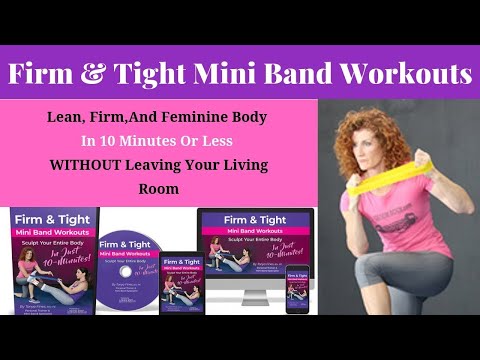
Home workout Firm & Tight reviews 2026 pros and cons do exist, and pretending they don’t makes people quit faster when reality shows up.
The biggest drawback is progress. At home, it is easy to repeat the same routine until you plateau. Many “best home workout” videos are intense, but not necessarily progressive. They can give you a great sweat today and the same difficulty level next month.
Another issue is equipment limits. If your goal is muscular strength, you need a way to add resistance over time, whether that is heavier dumbbells, more resistance band tension, or more challenging variations. Without progression, your training can drift into maintenance-only territory.
Then there is recovery and technique. People at home often move fast to get through a workout, which can hide sloppy form. You might feel it in your target muscles, or you might just feel sore in the wrong places. That is not a morality problem, it is a feedback problem.
Here’s what I tell people to watch for:
Common roadblocks
- Plateaus that feel sudden after a few weeks of improvement A lack of progressive overload once the novelty wears off Form breakdown when workouts get harder Too much intensity too soon, especially with jumping or unsupported impact Lower overall training volume if the plan is too short or too exhausting
The fix is usually not complicated. It is about choosing effective home workouts that include a progression plan, and matching them to your current capacity. If you cannot progress weight, you can progress reps, tempo, range of motion, or leverage through exercise variations. None of those are magic, but they are real levers.
How to choose a “best home workout” that is worth your time
So how do you decide whether the best home workout is worth it for you? The answer is less about the program’s popularity and more about whether it supports your goals and constraints.
Start with your lifestyle. Can you train 3 days a week reliably, or do you need 4 shorter days? Do you prefer moving daily with light sessions, or pushing harder with longer breaks? I have seen people quit because they picked a plan that was too demanding for their actual week.
Next, check the program’s structure. The best home workout plans usually have clear exercise choices, sensible volume, and progression built in. You should be able to answer, after a few sessions, what changes next week. If the plan feels like a mystery, it is harder to stay motivated.
Finally, think about equipment and space. You do not need a home gym to train well, but you do need enough stability to perform safely. A small mat and a sturdy surface can go a long way, but poorly designed setups can turn into a recurring annoyance.
A practical way to judge fit is to ask yourself one question: Will I still want to do this in four weeks? Worth it tends to be the plan that you can live with, not the one that looks the most impressive for the first ten minutes.
A simple decision rule
If you can see a clear progression path, the plan respects your current joints and fitness level, and you can realistically schedule it, the odds are good that it will be worth it. If any of those pieces are missing, you can still train at home, but you may need a different plan.
The real takeaway: worth it depends on fit and follow-through
Home workout programs can absolutely deliver results, especially when they reduce friction and help you show up consistently. The best home workouts are worth it when they support your ability to progress, give your body enough challenge without unnecessary chaos, and feel doable on the days you are tired.
home fitnessThe drawbacks are manageable, but only if you treat home training like actual training, not just workouts. Technique, progression, and recovery still matter, even when the workout takes place in slippers.
If you approach home fitness with that mindset, home exercise effectiveness becomes less about whether your living room is “good enough,” and more about whether you are building a routine you can stick with. That is where the real payoff lives.